
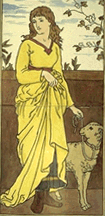
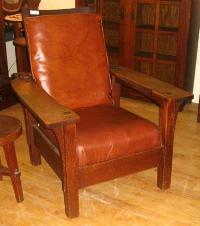
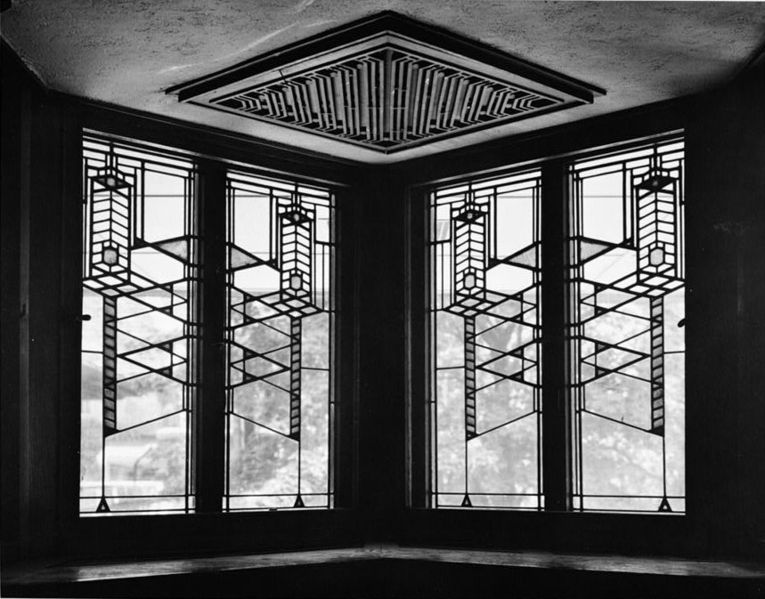
 Wednesdays' Top Design is Episode 7, "Chef's Choice" It appears that the designers are tasked with designing a dining room for this individual challenge. They mention that they are required to do it in the Arts and Crafts style. In the preview, there is also a mention by Goil of Arts and Crafts and Modern. For this post, I'll just focus on Arts and Crafts. This is very brief - it could be a thesis. But, here's a little history and some beautiful images:
Arts and Crafts Movement in America:
Inspired by English work, Arts & Crafts artisans and workshop groups around America began producing their own designs by end of the 1870's, with especially strong centers of activity in Boston and Cincinnati. The Arts & Crafts Movement also shaped American architecture, especially with the development of the Queen Anne Revival, and with emerging styles that were based on the "old-fashioned homes" of the American Colonial period: the Shingle Style and the Old Colony Style. The first generation of Arts & Crafts artisans employed a diverse expression of styles, which drew inspiration from England, but also from Japan and from the regional traditional crafts and architecture of America.
Keywords: Natural materials - oak woods, metals and glass. Stylized natural images (birds, flowers, fish) on wall papers, fabrics and stained glass works. Colors - muted "natural" colors.
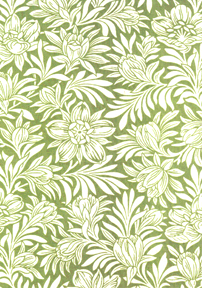
"Chrysanthemum", an English design. A pattern from c. 1890 of lacy leaves and flowers:

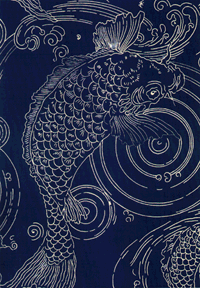
Candace Wheeler (1827-1923)founded the Society of Decorative Art in New York City in 1877. In 1879 Mrs. Wheeler joined in partnership with noted artists Louis C. Tiffany, Samuel Colman and Lockwood de Forest in the firm called "Associated Artists," which produced interior decorations, pattern designs and needle work for clients that included Samuel Clemens (Mark Twain) in Hartford, Connecticut, and the White House. When this partnership ended in 1883, Mrs. Wheeler continued "Associated Artists" as an all-women design firm in New York, producing needlework and printed textiles until 1907. Candace Wheeler's printed textile designs have a strong, self-assured line quality and show a marked influence of Japanese art which was in fashion in the late 19th century.

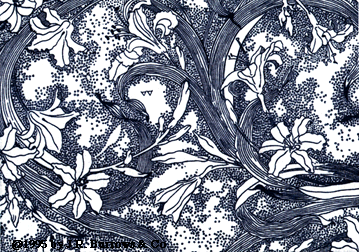 Source JR Bourroughs & Co.





Various sources:
William Morris Society
Frank Lloyd Wright Foundation
JR Burrows & Company
Aspen Carpet Designs - rug making in the Arts & Crafts, Mission, Prairie styles, and more
Trixie over at Kora-in-Hell has an interesting and educational piece on this topic as well.
Also recommended:
Click here for all Top Design posts.

Tidak ada komentar:
Posting Komentar